Gudzįh (Caribou) are and always have been critical to our Dena way.
Our Elders say that “when the Caribou are healthy, our people are healthy.” We share an age-old history of coexistence with caribou as relations on this land. Our stories passed down to us speak of a time when people shape-shifted into caribou and travelled with them, and when caribou sustained our ancestors during challenging times in our history.
We use every part of the caribou. We eat all the meat, the fat, the organs, the head, the blood, some of the guts, and the marrow. Caribou leg bones are made into tools necessary for cleaning and tanning hides. Caribou brain is used for curing hides when making leather. Some of our people today earn a living through carvings they make from caribou and moose antlers. Contemporary artisans and designers create modern adornments and high-end jewelry from caribou hides, inspired by our traditional clothing. We make babiche from caribou skins and use it to sew clothes, stitch wounds, and make boats, sleds and tools.
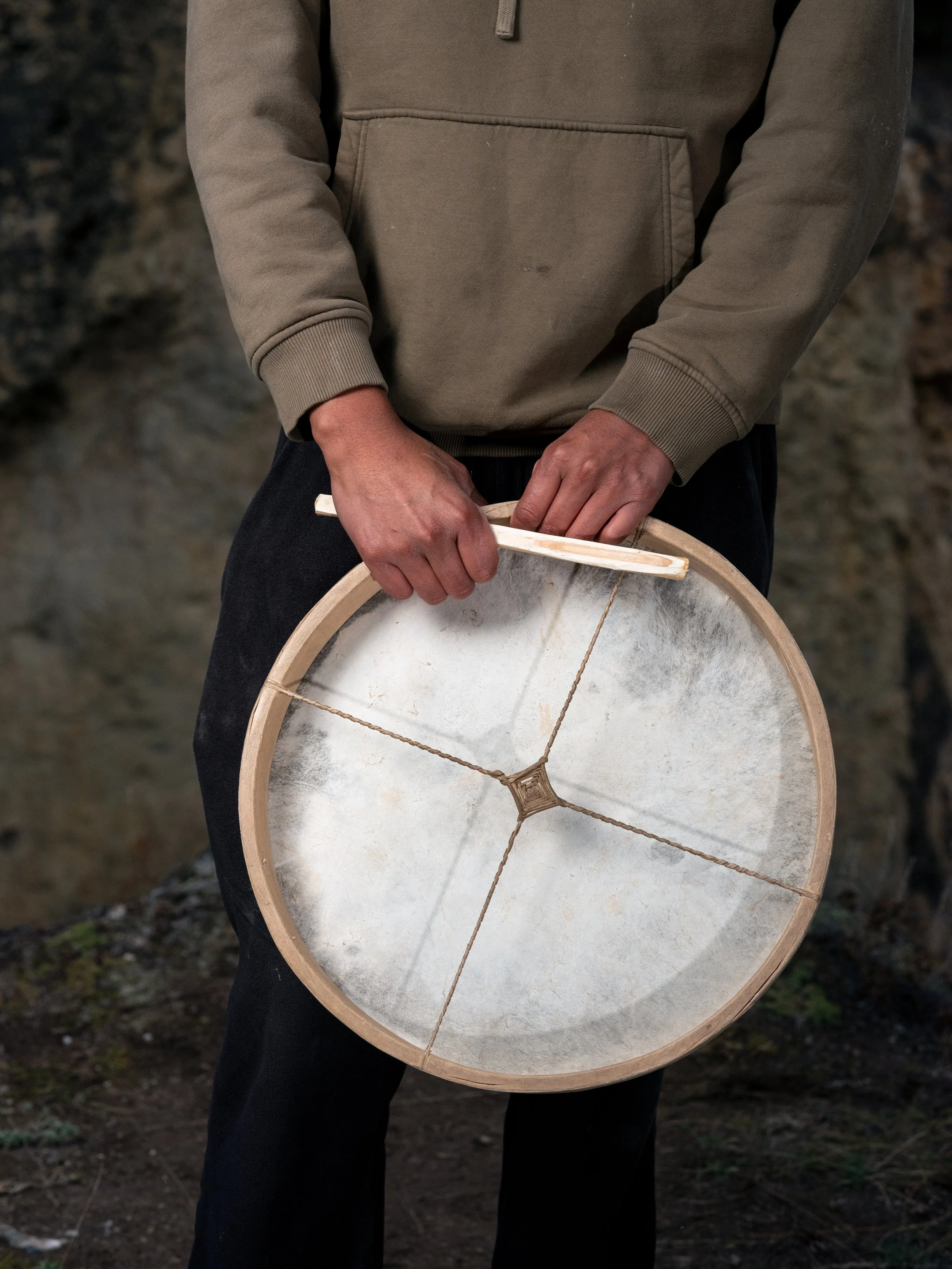
Of tremendous importance to Dena culture, our drum — which carries our own music, prayers, dances, and hand games — also comes from the caribou.
Photo by Peter Mather
Within the Tū Łī́dlini area, there are at least 6 different herds of Mountain Caribou. Almost anywhere you travel within Gūkēyeh Gūs’ān, you are in Caribou Territory.
We are guardians of the caribou.
One of those herds, the Finlayson Caribou Herd, roams what is one of our most important from-the-land food baskets in the Tū Łī́dlini area. The Herd is central to the life, identity, and continuity of our Nation, yet despite our adamant opposition, crown governments recently permitted the opening of an led-zinc mine within the Herd’s calving grounds.
In March 2026, we declared the Finlayson Caribou Herd to be a living ecological person, possessing inherent rights that must be recognized, respected, and upheld by all governments, corporations, and peoples. We identified 5 major rights they hold, which centre our ways of life and our existing relationship to caribou. These include the right to exist and thrive, the right to representation and legal protection, the right to a healthy habitat, the right for the Herd to be unimpeded in its movements, and the right to be seen as subjects with the inherent right to live rather than to be seen solely as resources to be extracted.
This declaration reflects our own Dena laws and our existing relationship to caribou. There is growing global recognition that nature and its constituent beings possess intrinsic rights that exist independently of their utility to humankind, which is just catching up to what our people have valued time immemorial. Our laws have always recognized the Gudzįh (Caribou) as a sacred being deserving of respect, protection, and reciprocity.
Our responsibility ethic is all about the health of our connections to our land and to each other, and as a result, our stewardship calls us to reduce our own harvest of caribou. We urge others to follow our lead and also think to diversify their harvest, reduce their reliance on caribou, and to respect our laws, lands, and waters. Well known caribou habitat has been impacted by seasonal over-hunting, despite repeated efforts by our community and others to reach people and encourage them to consider self-regulating their hunt. This has resulted in closures to caribou hunting in critical areas. We have also limited the hunting period in the fall, in advance of bull rutting season, during which time Elders advise their meat is virtually inedible.
Our people will continue to live in relationship with our caribou relatives, Gudzįh, as we have for time immemorial. Much of our territory is Caribou Territory, with critical caribou habitat that we intend to protect through the Gūkēyeh Gūs’ān Indigenous Protected and Conserved Area, safeguarding their fate and our own.
